
When we talk about marriages we also talk about relationships.
We hear it all the time in the press or through someone we know or on social media that Menopause can put a huge strain on marriages and relationships. It’s true, it does put pressure on relationships and can test even the strongest of partnerships usually because it exacerbating pre-existing issues, leading to a rise in conflict and potentially contributing to divorce or separation. While menopause doesn’t directly cause divorce, symptoms like mood swings, sleep disturbances, and changes in libido can heighten tension, and some studies show a strong correlation between menopause and relationship breakdown, with many women citing it as a key factor in their divorce. Over 60% of divorces are initiated by women, often during menopause.
Understanding the dynamics around menopause symptoms and pre-existing issues within a relationship isn’t about placing blame or suggesting that menopause dooms marriages or relationships. Instead, it’s about recognising the very real challenges that couples face during this time. To put this in perspective, approximately 3 million women in the UK are experiencing menopause at any given time. That’s a substantial portion of our population navigating not just the physical and emotional challenges of this transition, but also potentially facing relationship difficulties as well.
It’s important to highlight that menopause rarely acts as the sole catalyst for divorce or separation. More often, it serves as a spotlight, illuminating existing cracks in a relationship that may have been developing for years. The intense physical, mental, and emotional symptoms of menopause can create a perfect storm that brings underlying issues to the surface.
It could be said that a husband or partner who does not understand menopause, loses his wife or partner. A husband or partner who does, keeps a happy marriage or relationship for life. Menopause is not an excuse, a wife or partner does not want to feel this way, believe us, we hear it all the time from our clients.
Those mood swings you see, they are not on purpose despite what people think. During menopause the sex hormone Estrogen drops dramatically – this hormone once protected her mood, her sleep, her memory, her joints and even the intimacy in a marriage or relationship. When Estrogen falls off a cliff, Serotonin and Dopamine in her brain also falls. That makes her emotions unstable. She may feel anxious. She may feel she has lost all sense of herself. At the same time, Cortosol, the Stress hormone Rises.
Her body is stuck in a constant state of alarm – she cannot sleep, she wakes up many times at night. Her body temperature swings like a pendulum – hot then cold from the inside out. Chronic lack of sleep leaves her exhausted, forgetful and irritable even when she doesn’t want to be.
Hormones are not just changing in her brain, they fluctuate across her whole body. Her joints lose natural lubrication leaving her in pain and discomfort. Her hair changes as does the colour and elasticity of her skin, she may gain weight. Loss of self-confidence as she navigates changes in their body and identity. Cognitive changes that might affect decision-making and communication. All concepts of purpose may be lost. And so the list goes on.
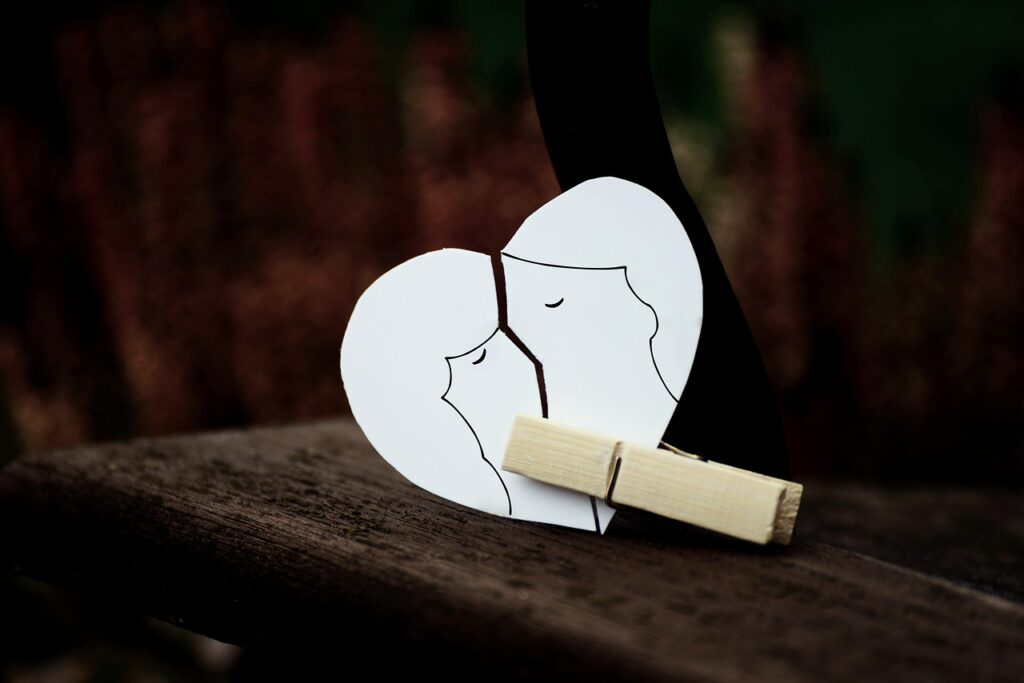
So what is needed to create the harmony between you? What the magic answer to such a profoundly life changing natural occurrence that leaves you curious about the world and people around you? While the challenges are real, many couples successfully navigate menopause together and even find it liberating and empowering with the right approach and understanding. The key often lies in open communication and a huge dollop of mutual and unconditional support, love and kindness.
Here are some key ways to help your relationship flourish:
- Talk about menopause and how it’s affecting you both. Men also undergo hormonal changes as they age impacting on their physical health as well as their mental health however the hormonal decline is less rapid and reduces gradually over a far longer period of time. Avoid dismissive language – listen to hear and not to respond as this impacts the whole relationship.
- Schedule regular check-ins to talk calmly about how you feel both emotionally as well as physically, rather than having intense conversations in the heat of the moment.
- Give each other space when needed. Identify your needs as well as the needs of your partner or your children or work.
- Step away from arguments if emotions are running high, as there’s no benefit in ‘winning’ a fight as this builds resentment.
- Keep your sense of humour and be patient with each other. Be kind and compassionate.
- Offer compliments and appreciation. Small gestures go a long way in boosting self-esteem – we all need to feel valued and appreciated.
- Exercise together to improve mood and health.
- Be gentle about intimacy – this can change for both of you in different ways – focus on emotional closeness and safety and rebuild physical connection gradually. Women can feel more emotionally connected when they feel emotionally safe and on the same mindset wavelength as their partner.
- Navigating menopause together takes empathy, patience, and often professional guidance. But above all, it takes teamwork.
If you’re navigating the challenges of menopause alongside relationship difficulties, you’re not alone. The connection between hormonal changes and marital or relationship stress is real, and increasingly recognised by both medical and legal professionals. We offer various tailored packages, workshops and 1-1 sessions for those who are experiencing Menopause symptoms as well as those who are experiencing relationship challenges to help you understand what is happening to you and how it is impacting on your relationship, your work and family life. From there, you can make clearer and more informed choices as to what you truly want from life moving forward.
Hope this has helped, TOA